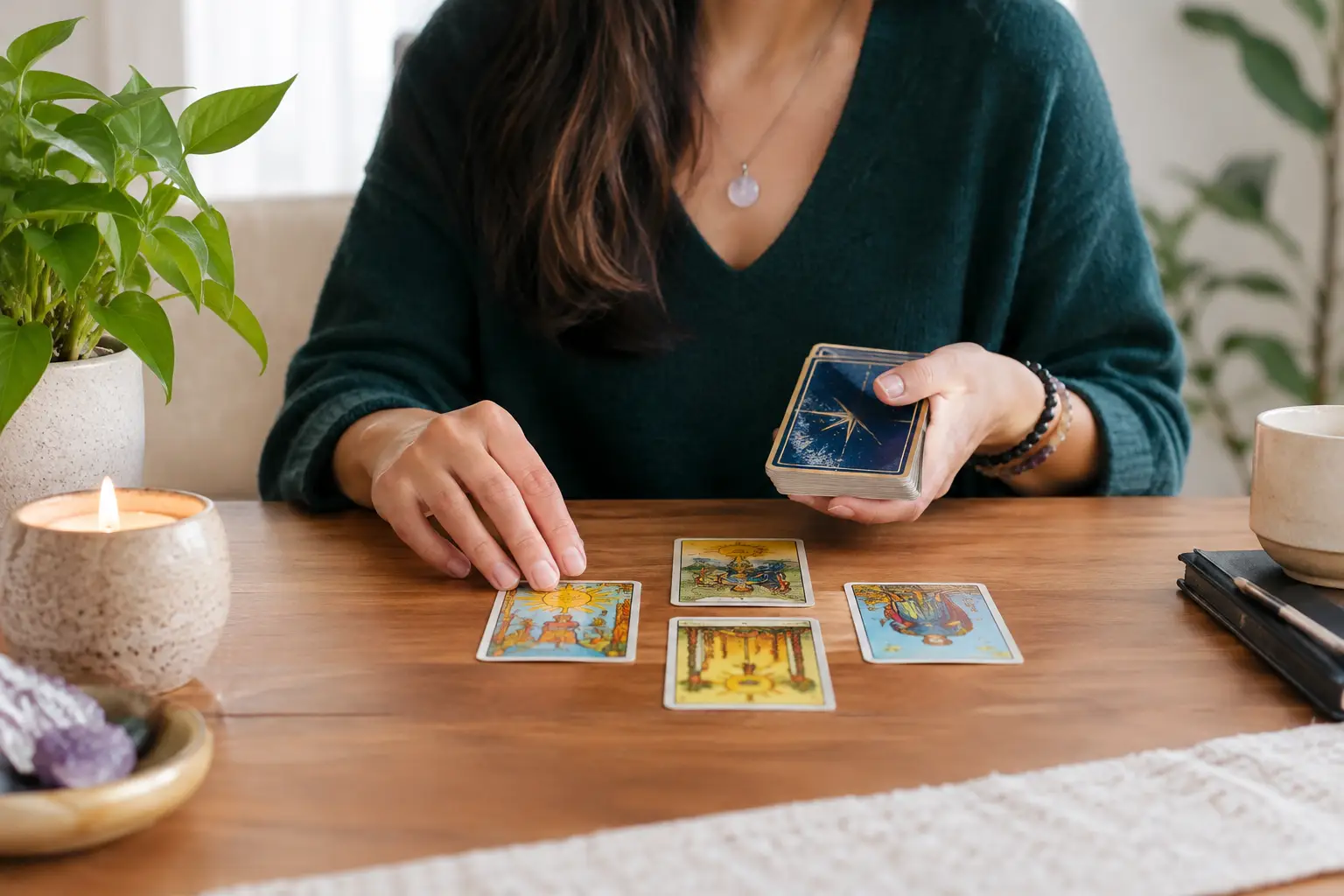
A tarot reading can land at a tender moment: after a breakup, before a career change, while waiting for an answer, or when grief has made the future feel especially hard to hold. That is why reading tarot ethically is not just about knowing the cards. It is about how insight is offered, how uncertainty is handled, and whether you leave the conversation feeling clearer rather than controlled.
A caring reader does not take your power away. They help you see the patterns around a situation, the choices in front of you, and the emotional truth you may have been too close to recognize. The decision is still yours.
What Ethical Tarot Reading Really Means
Ethical tarot is honest, compassionate, and grounded in consent. It does not promise certainty where life cannot offer it. A reader may see strong energy around a person, a relationship, an opportunity, or a likely timing window, but a reading should never be presented as a fixed command from the universe.
People change. Circumstances change. You can change your mind. Tarot can illuminate the road you are on, but it should not tell you that you have no ability to choose another one.
This matters most when you feel vulnerable. If you are heartbroken, worried about money, missing someone who has passed, or desperate for a relationship to work, certainty can sound comforting. But comfort that depends on fear, dependency, or a costly promise is not genuine guidance.
An ethical reading makes room for complexity. It can say, “There is potential here, but there are also boundaries that need attention,” or, “This career path looks promising, yet it may require a practical plan.” Direct insight and emotional care can exist together.
Reading Tarot Ethically Protects Your Free Will
The clearest sign of a responsible reader is that they respect your agency from beginning to end. They do not tell you whom you must marry, whether you must leave your job, or that a specific future is guaranteed. They offer what they perceive, explain the energy around the issue, and leave space for your judgment.
That does not mean every reading will be vague. Ethical is not the same as avoiding a difficult truth. A reader can be candid if they see a relationship stuck in a painful cycle or a work situation that is draining your confidence. The difference is in the delivery. You deserve insight without judgment, threats, or pressure.
A helpful reading may reveal that you are waiting for someone who is not showing up consistently, that you are ignoring your own needs, or that fear is keeping you from a meaningful opportunity. Those messages can be uncomfortable. Still, they should be offered as guidance for your consideration, never as a verdict on your life.
Predictions Should Be Possibilities, Not Promises
Timing is one of the most common questions in tarot: When will they call? When will I meet someone? When will work improve? A reader may receive a timeframe or recognize that movement is close. Yet timing is influenced by the choices and readiness of everyone involved.
The ethical approach is to describe timing as a possibility, not a contract. It is more honest to say that a situation appears to be building over the next few months than to guarantee that a particular person will return on an exact date. A good reading helps you prepare for what may unfold and understand what you can do now.
Consent Matters, Especially When Other People Are Involved
Many tarot questions involve another person. You may want to understand an ex-partner’s feelings, a new connection’s intentions, or the tension in a family relationship. This is natural. Relationships affect us deeply.
Ethical boundaries matter here. A reader can explore the dynamic as it affects you: what the connection is teaching you, what behavior you are receiving, what communication may help, and what you need to protect your peace. But they should be cautious about treating another person’s private thoughts or future choices as facts.
The same care applies to sensitive subjects. A reader should not use tarot to diagnose a health condition, replace legal or financial advice, or make frightening claims about danger, curses, pregnancy, or death. If a concern requires a doctor, therapist, attorney, financial professional, or emergency support, tarot belongs beside that practical help, not in place of it.
For mediumship and grief readings, gentleness is especially necessary. A meaningful session can bring comfort and a sense of connection, but no ethical practitioner should exploit loss by making grand promises or insisting that a client must keep booking to remain connected to a loved one.
Red Flags That Turn Guidance Into Pressure
You do not need to know tarot to recognize when a reading feels wrong. Pay attention to your body and your instincts. If you leave feeling frightened, ashamed, trapped, or pressured to spend more money, pause before continuing.
Be cautious if a reader tells you that you are cursed, claims only they can remove negative energy, demands repeated sessions to prevent something bad, or guarantees a specific romantic outcome. These tactics create dependence by turning uncertainty into a threat.
Other warning signs are less dramatic but still matter. A reader who interrupts constantly, ignores your stated boundaries, pushes spiritual beliefs you do not share, or speaks with absolute certainty about major life decisions may not be offering the emotional safety you deserve.
A paid reading can absolutely be ethical. Experience, time, preparation, and energy have value. The issue is not payment. The issue is whether the price and service are clear, and whether you are free to say no without being made to feel guilty or afraid.
What You Can Expect From a Responsible Reader
A trustworthy reader sets a respectful tone before the cards are even discussed. They explain what they can offer, invite your question, and make clear that the reading is guidance rather than control. They do not need every detail of your story to begin, but they should listen carefully when you choose to share.
Privacy matters as well. Personal details, relationship struggles, grief, and financial worries should be treated with discretion. You should never feel that your pain is being used as entertainment or as material for someone else’s story.
An ethical reader also knows when to stay within their scope. They may encourage grounding, reflection, honest communication, or practical next steps. They should not claim to be a replacement for mental health care or professional advice when those supports are needed.
At Tarot by Lea, the intention is clear, direct insight without scripts, fear-based tactics, or pressure to surrender your choices. The value of a reading is not that someone else takes over your life. It is that you can see your situation with more honesty and move forward with greater self-trust.
How to Receive a Reading in a Grounded Way
You can help create an ethical experience by arriving with an open question rather than demanding a fixed outcome. Instead of asking, “Will my ex come back?” you might ask, “What do I need to understand about this connection, and what is healthiest for me now?” The second question invites a fuller answer.
Take notes if you can, especially when a reading touches on several areas of your life. Then give yourself time to sit with what was said. A reading does not need to dictate an immediate decision. Sometimes its purpose is to name what you already know deep down, so you can act when you are ready.
Keep your practical footing. If cards point toward a career shift, update your resume, research the role, and consider the financial reality. If they point toward healing in love, look at communication, consistency, and boundaries. Spiritual insight is most useful when it supports real-world choices.
The Best Reading Leaves You More Like Yourself
Tarot is at its most helpful when it brings you back to your own inner voice. You may not receive every answer you hoped for, and you may hear something that asks you to be brave. But you should leave with more perspective, not less power.
Choose readings that make room for your feelings, your common sense, and your right to decide. The cards may offer a mirror, a warning, or a hopeful opening. What you do with that clarity remains, as it should, your own.
Comments are closed